

Trailing Stops Look Better on Old Charts Than in Live Trading
Drawn on a finished chart, a trailing stop follows the trend and exits near the top. Live, it has to survive every ordinary dip along the way, and a fixed distance often cannot.
The position Trailing stops work when the trail is wider than the stock's ordinary noise, and a trail chosen by eye from old charts usually is not.
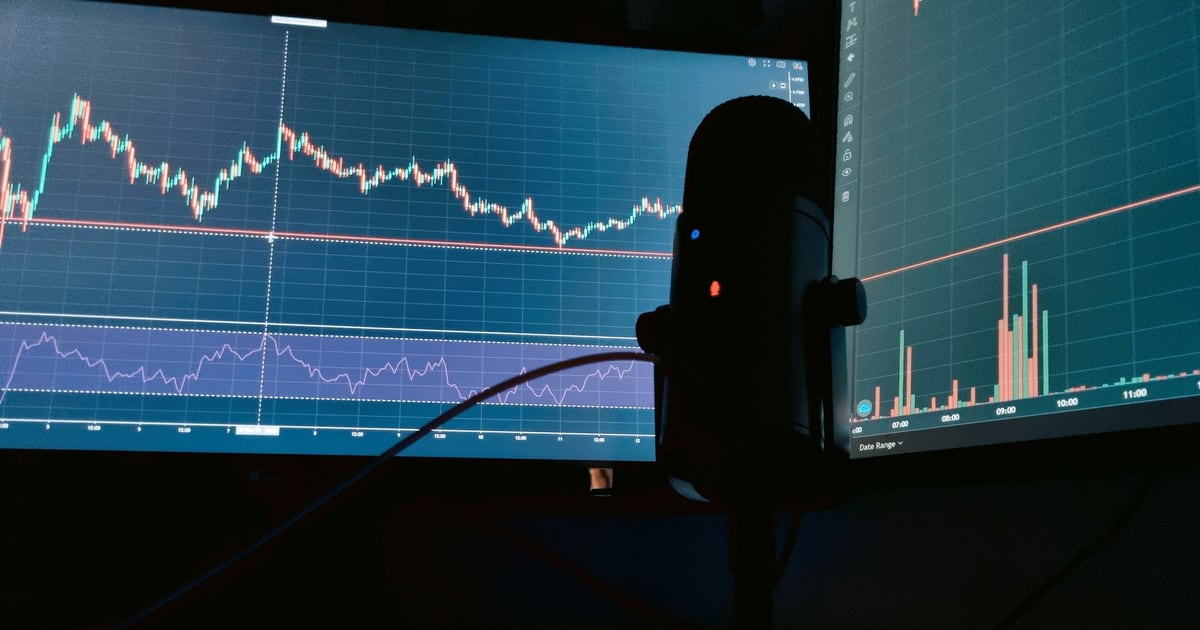
Scroll back through a stock that trended cleanly for three months. Drag a 3 percent trailing stop along the highs. It follows the move neatly. Step by step it climbs behind each new high, and when the trend finally rolls over it exits somewhere close to the top, keeping most of what the stock gained over those three months, which is exactly the result that makes the method look so attractive in hindsight.
The picture flatters the method. You are looking at daily closes or smoothed bars, you already know where the trend ended, and your eye skips the days when the stock dipped hard during the session and recovered by the close, which a live order would not have skipped.
What the live order faces
A trailing stop order moves its stop price up as the stock makes new highs, keeping a fixed distance behind the high, and never moves it down. When price falls back by the trail amount, the stop triggers.
Two things happen then. The stop becomes a market order in the standard form, so the fill is whatever the bids offer at that moment, and in a fast dip that can be noticeably below the trigger. Then the position is gone, and if the dip was routine, the trend carries on without you.
Some platforms offer a trailing stop-limit instead. That caps the fill price and brings back the risk of no fill at all.
The arithmetic of a trail that is too tight
Take an illustrative stock. On an ordinary day it swings about 4 percent from high to low. You set a 3 percent trail.
On that stock, an ordinary day is enough to trip the trail. Nothing broke. The trend may be fully intact at the close, and the trade is over only because the order had no way of telling a routine dip from a real reversal.
The fix sounds simple: widen the trail. A wider trail gives back more of the gain when a real reversal comes. No distance avoids both costs.
What you can do is measure before you choose. Look at the stock’s own recent sessions: how far each one ran from high to low, and how deep the pullbacks inside the current trend went before it made a new high. Set against those numbers, a proposed trail either clears the normal noise or it does not, and you find out on the chart at your desk, before an order finds out for you in the market.
Three ways to trail
| Method | How it sets the stop | Main weakness |
|---|---|---|
| Percentage | A fixed percent below the high | Ignores how volatile the stock is |
| Fixed dollar | A fixed amount below the high | Means different things at different prices |
| Structure-based | Below the most recent higher low | Needs manual updates and judgment |
Percentage trails are easy to set and scale with price. A 3 percent trail is the same fraction on a 20 stock as on a 200 stock. What it ignores is that some stocks routinely move 1 percent in a day and others 6 percent, so the same setting can be loose on one and hopelessly tight on the next.
Fixed dollar trails are the most arbitrary. A 2.00 trail is 10 percent of a 20 stock and 1 percent of a 200 stock, and it stays the same dollar amount as the price climbs, so it becomes relatively tighter the further the trend runs.
Structure-based trailing is manual. Once the stock makes a new high and pulls back, you move the stop to just below the most recent higher low, so the stop tracks the trend’s own rhythm and gives the stock the room its recent pullbacks needed, which is why many discretionary traders prefer it to either fixed method. The costs are attention and discipline. You must update it on time, and you must resist moving it for reasons that are really about the open profit. The same crowd logic as with round-number stops applies to an obvious swing low, so a buffer below it helps.
When trailing works best
Trailing stops do their best work under a few conditions:
- The trail clears the stock’s normal daily swing.
- The stock trends with shallow, orderly pullbacks.
- Liquidity is deep enough that a triggered market order fills near the trigger.
- The trade has already paid part of its target.
That last condition is the one traders overlook. Taking some shares off at a planned level and trailing the rest, the approach weighed in the scaling out trade-off, lets a trail be generous without putting the whole position’s gain at the mercy of one dip.
Trailing also helps when you cannot watch the screen. A resting order acts while you are away, which a manual structure-based stop cannot do.
What no trail protects against
Gaps. A trailing stop sits at a price, and if the stock opens below that price, the order triggers at the open and fills wherever the market is, as covered in what happens to your stop when a stock gaps. A trail set by percent does nothing about overnight news.
A conditional verdict
For a liquid stock in an orderly trend, with a trail set wider than its normal range and part of the position already banked, a trailing stop is a sensible exit. For a jumpy stock, a tight trail chosen by looking at old charts is likely to take you out on noise, and a structure-based stop updated by hand will usually serve you better, if you have the attention to keep it current.
Also asked
- Should a trailing stop be tighter or wider than my initial stop?
- There is no fixed answer. A trail tighter than the stock's normal pullbacks will be hit by noise, so many traders keep it at least as wide as the initial stop until the trend has shown what its pullbacks look like.